- ISO 9001:2015 Certified Company
- +91-9672985402
- info@vasundharamicron.com

How Talc Compound Manufacturers Control Quality Across the Supply Chain

How Long Can Dolomite Lumps Be Stored Without Quality Degradation?
July 27, 2026
Why Textile and Rubber Manufacturers Are Switching to Dolomite Lumps
September 9, 2026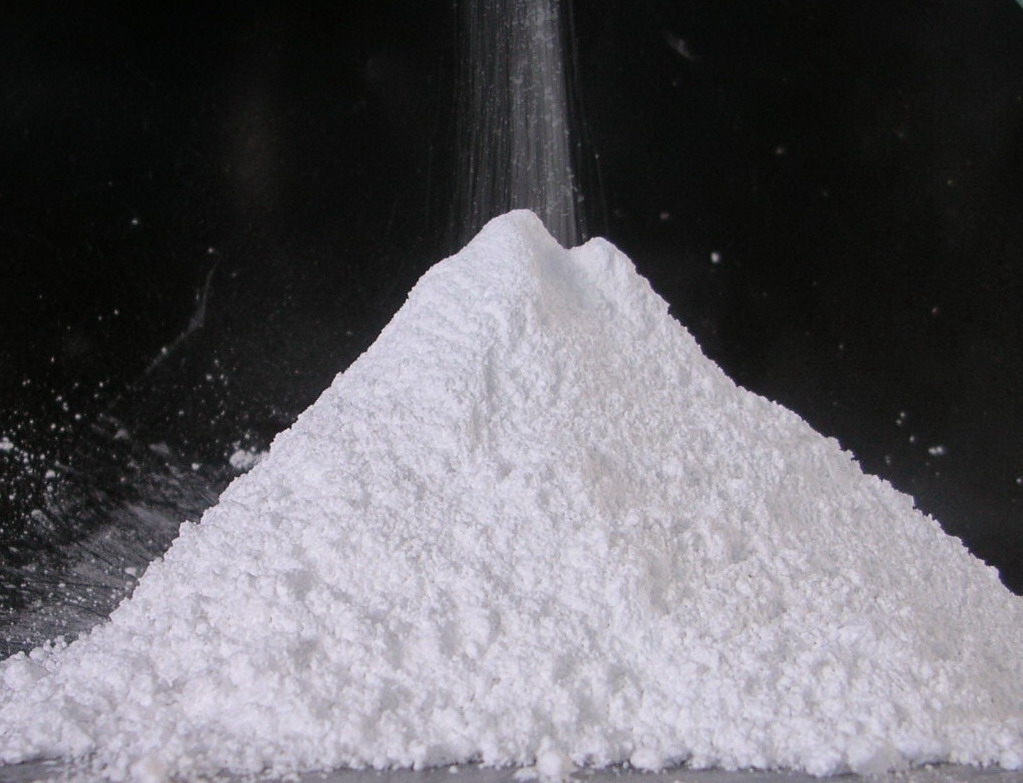
A paint that separates on the shelf. A plastic sheet that warps a week later. A rubber compound that just will not cure evenly, no matter what the operator tries. I've seen all three, and honestly, they trace back to the same overlooked thing almost every time. Every batch that leaves a facility run by talc compound manufacturers has to match the last one almost exactly, or a customer's product starts acting off, and nobody can point to why. Sounds simple. It isn't, because talc doesn't arrive as some tidy, lab-cooked powder. It comes out of the ground carrying whatever nature happened to give it, messy and inconsistent, and somebody has to iron that out before it ever touches a buyer's mixing tank.
Why Talc Compound Manufacturers Are Held to Strict Quality Standards
On paper, talc is almost boring. A soft, hydrated magnesium silicate, nothing exotic about it at all. Then you look closer. Deposits from different mines, even different corners of the same mine, carry different purity, whiteness, and impurities like iron or carbonate, sometimes more than you'd expect from rock that looks identical to the eye. A cosmetics formulator wants pharmaceutical-grade purity, no negotiating on that. PVC pipe fillers, meanwhile, barely care about color and obsess over particle size and oil absorption instead. That gap is exactly why quality control can't be one box ticked at the end of a line, an afterthought squeezed in before shipping. It runs through sourcing, processing, testing, and packaging as one thread, start to finish.
Sourcing Raw Talc: Where Quality Actually Begins
Sourcing from the right place is not something that can be fixed upstream. You won’t find this surprising truth being advertised anywhere, but ask any plant worker, and they'll agree. The best suppliers will work with the limited group of known mines, so they can be sure their supply is consistent and the origin of the rocks is known. All incoming ore is inspected and sampled before being allowed onto the production floor. The process might seem tedious; no one wants to take pictures of it for promotional material, but it is the key point in the process when production issues are eliminated before they become expensive.
Grinding, Micronization, and Getting the Particle Size Right
Once ore's accepted, it gets crushed and ground into fine powder, and this, honestly, is where a lot of the real fine-tuning happens. Particle size decides how the talc behaves once it lands in a customer's product. Too coarse, it won't disperse right. Too fine, it quietly shifts viscosity in ways a formulator never asked for and definitely didn't plan their week around fixing. Micronizing mills get recalibrated on a set schedule, not just when someone finally notices something's wrong, and operators pull samples mid-run instead of waiting for a full batch to finish before finding out the grind drifted off spec.
How Talc Compound Manufacturers Verify Quality Before Dispatch
This is where numbers replace guesswork, full stop. It's really what separates suppliers who talk about quality from the ones who actually live it day in and day out. Whiteness, brightness, moisture, pH, oil absorption, mesh size, all of it gets checked against the customer's own spec sheet, not some looser in-house average that's easier to hit on a bad day. Any batch outside tolerance gets held back instead of quietly folded into a "good enough" average. That shortcut happens at some places, and it eventually surfaces as an inconsistency nobody can trace back to its source. Serious talc compound manufacturers keep a paper trail for every lot, so a client's problem gets traced to the exact production run in minutes, not after three days of digging.
Packaging, Storage, and Keeping Every Batch Traceable
The quality process doesn't end once powder clears the testing process, no matter how tempting it may even seem to cross that finish line after long hours of work. Talc is quite hygroscopic, and improper packaging can undo squaring weeks of work in seconds. Water enters, clumping starts occurring, and stuff that seems to be perfect at the testing room, comes to the customer on their docking station in a completely different shape from that that left the facility. Everything should be packed properly, raised above wet surface, and rotated properly, not just taken from the nearest place because of the rush. Each part contains the batching code to help trace it back to the moment something goes wrong.
Why Choose Vasundhara Micron
We built our process around a complaint we kept hearing before customers ever worked with us: nobody should have to re-test a whole shipment just to trust it. At Vasundhara Micron, every batch gets tested against the customer's own specification, not whatever standard happens to be easier for us that week. Anything that doesn't clear tolerance gets held back, full stop, no quiet workarounds. We keep traceable records for every lot, and if an issue turns up weeks later, we pull the batch history and actually work through it with the customer instead of shrugging and pointing elsewhere. That accountability after the invoice is paid, if I'm being honest, is the real reason long-term clients across paints, plastics, and rubber keep coming back to Vasundhara Micron rather than shopping around each time.
What This Means for Talc Compound Manufacturers and Buyers
Quality here was never decided at one checkpoint, no matter how convenient that would be for everyone involved. It's the sum of dozens of smaller decisions made at the mine, the mill, the lab, and the loading dock, most of which a buyer never sees and just has to take on trust. This is especially important when evaluating talc compound manufacturers because consistency depends on sourcing, processing, testing, and handling at every stage. So ask the annoying questions anyway. Which mines do they really source from? How often do they recalibrate equipment, and can they show it, not just say it happens? The suppliers who answer without flinching, without a pause, are usually the ones worth sticking with.